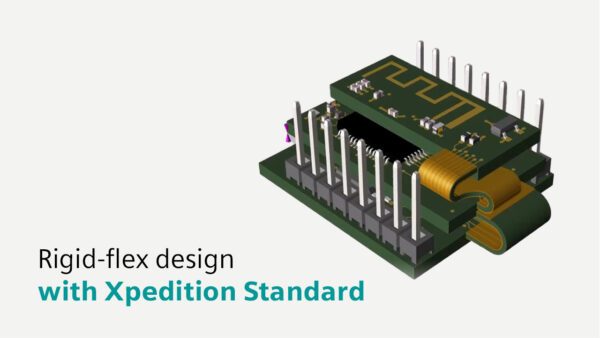


PCB design workflows are becoming increasingly complex as electronic products demand higher component densities, faster signal speeds, and adherence to rigorous technical requirements. Meanwhile, businesses still need to control development costs, minimize revision loops, and ensure timely product launches.
Xpedition Standard from Siemens is developed to address these challenges within a unified working environment. Join Vietbay to explore the standout features and benefits of this solution in the article below.
1. Revision Costs and Time Challenges in PCB Design
In the PCB development process, flaws discovered late in the cycle can trigger extensive rework -ranging from design adjustments and re-verification to the fabrication of new prototypes.
According to data from David Haboud, Senior Audience Marketing Manager at Siemens, an average PCB project undergoes 2.9 revisions before entering production. Each modification can cost approximately $28,000 and delay product launch schedules by at least 16 days.
Fragmented workflows across tools and stages force engineers to spend significant time on manual tasks, data exchanges, and information processing. Statistics show that wasted time can reach up to 61%.
These issues highlight that improving PCB design efficiency relies on more than just the operating speed of engineers. Businesses also require a better-connected workflow capable of detecting errors early and minimizing backtracking.
Read more:
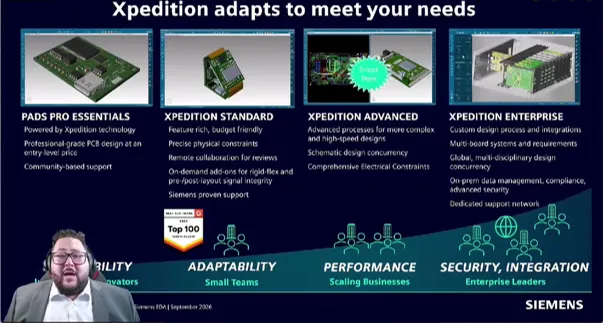
2. How Does Xpedition Standard Optimize the PCB Design Workflow?
Going beyond schematic capture and component placement, Xpedition Standard provides comprehensive functions that support multiple stages of the PCB design process.
- Design & Routing: Automated component grouping (Cluster) and intelligent routing (Sketch Route, Auto-tuning), ensuring precise delay control for high-speed signals.
- Proactive Component Sourcing: Integrated with the PartQuest portal (over 600 million components), allowing engineers to download 3D models, view datasheets, and check real-time inventory directly within the software, preventing post-design component shortages.
- Automated Design for Manufacturing (DFM): Utilizing Valor technology to scan hundreds of manufacturing rules. Errors are identified and resolved directly on the layout, completely eliminating prototype rework costs.
- Collaboration & Documentation: Automated generation of assembly drawings and embedding 3D models into PDFs (Blueprint). The Connect mode enables seamless remote teamwork with direct markup on individual components.
Read more:
- Top 5 benefits of Xpedition Standard in PCB design
- Accelerate PCB design productivity with AI and intelligent automation: Design reuse, data continuity and connected workflows
3. Flexible PCB Workflows Powered by AI
Today, Siemens integrates AI into Xpedition to assist engineers in reading and extracting technical data from complex datasheets, thereby reducing manual lookup efforts.
The Concurrency feature, scheduled for release in October 2026, will allow multiple engineers to work on the same design simultaneously while mitigating data conflict risks.
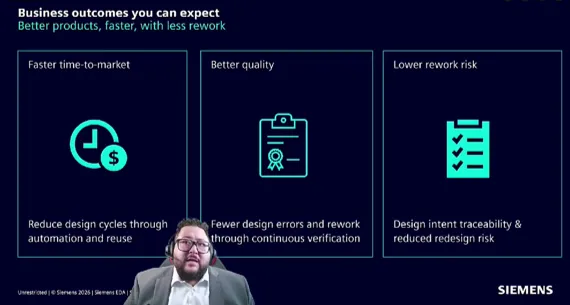
According to Siemens experts, implementing Xpedition can help product development teams shorten their design cycles by 30% to 50%, reduce hardware errors, and minimize prototype rework. This serves as a strategic investment to significantly optimize costs and accelerate time-to-market.
Contact VBTECH – The official Siemens distribution partner in Vietnam to receive consultations and experience Xpedition Standard.