

With each new generation of electronics demanding higher performance, tighter design margins and shorter schedules, optimization, automation and AI are becoming three key capabilities that help PCB engineers manage complexity within HyperLynx™.
The PCB engineer’s challenge: More, faster and more accurate
High-speed interfaces continue to push signal integrity (SI) and power integrity (PI) challenges to new levels, while engineering teams must bring products to market faster than ever.
Traditional design verification, which relies heavily on expert experience, manual simulation setup and repeated design iterations, has served the industry well for decades. However, it is increasingly difficult to scale as system complexity grows. Engineers spend considerable time configuring simulations, evaluating countless design variables and manually interpreting large volumes of results before identifying the root cause of a problem.
Combining optimization, automation and AI offers a path to faster, more consistent PCB analysis and better-informed design decisions. These technologies do not replace engineering expertise; they reduce repetitive tasks and the effort required to interpret complex data, allowing engineers to focus on what matters most: solving problems.
Many of these capabilities are already available in HyperLynx™, where PCB optimization and automation have long been part of the engineering workflow. Emerging AI technologies are continuing to improve productivity.
Optimization: Systematic, data-driven PCB analysis
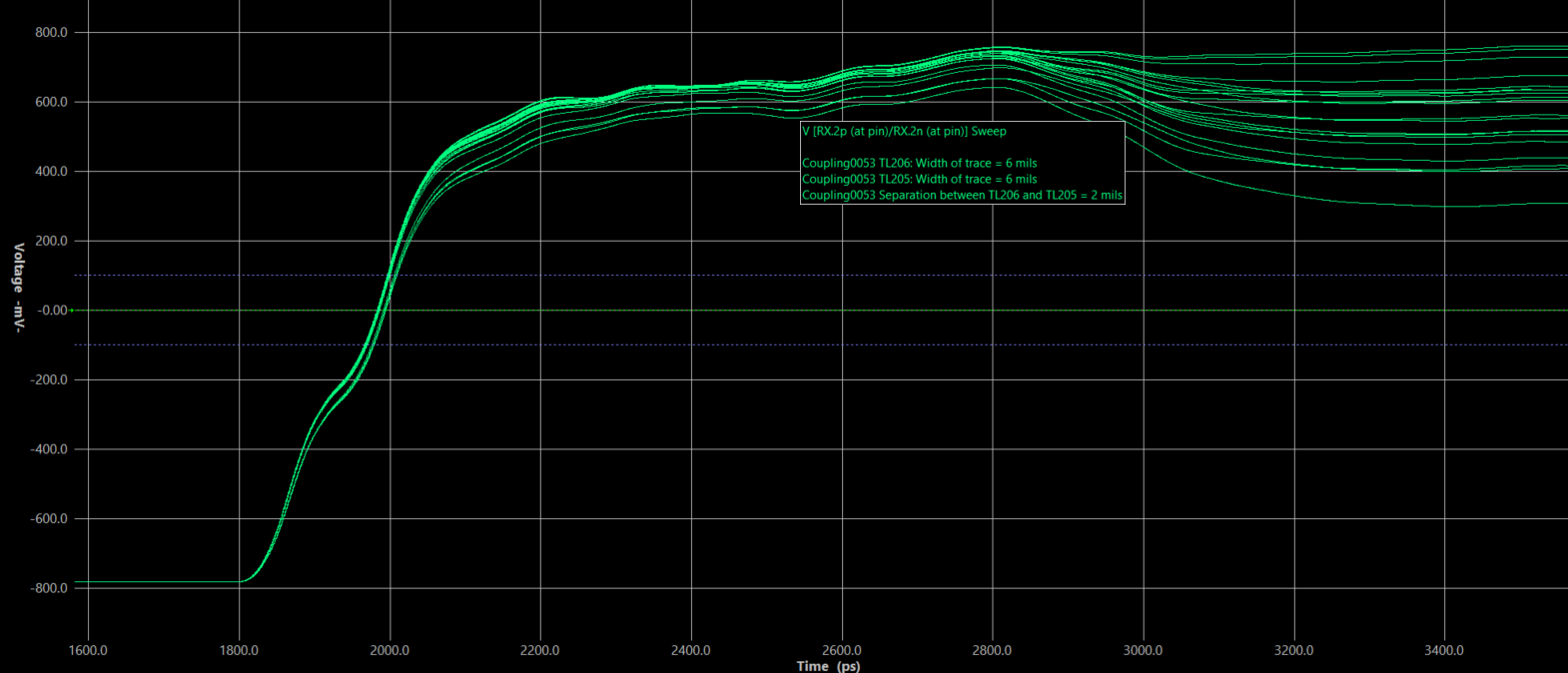
One of the most effective ways to improve design outcomes is to explore trade-offs systematically instead of relying solely on manual trial and error. HyperLynx provides several optimization technologies that help engineers efficiently evaluate a broad design space:
- Swept parameter analysis: Explore how variables such as trace width, spacing and stackup properties affect signal quality. Instead of guessing which changes will improve results, engineers can quantify the impact of each parameter and identify an optimal configuration.
- HyperLynx PDN Decoupling Optimizer: Automatically evaluate multiple capacitor placement strategies and recommend solutions that meet impedance requirements while reducing component count, cost and board area.
- HyperLynx Design Space Exploration (HL DSE): Evaluate multiple variables, including via geometry, pad size and anti-pad size, while balancing competing objectives such as impedance, insertion loss and return loss. Thousands of simulation combinations are narrowed down to optimal design regions, substantially improving efficiency.
Optimization gives engineers deeper insight into their designs and greater confidence in their decisions.
Automation: Scaling engineering expertise
As designs become larger and more complex, finding better answers is only half the challenge. Decisions based on those answers must also be applied consistently and efficiently throughout the design process. HyperLynx automation capabilities help engineers scale their workflows while maintaining accuracy and repeatability.
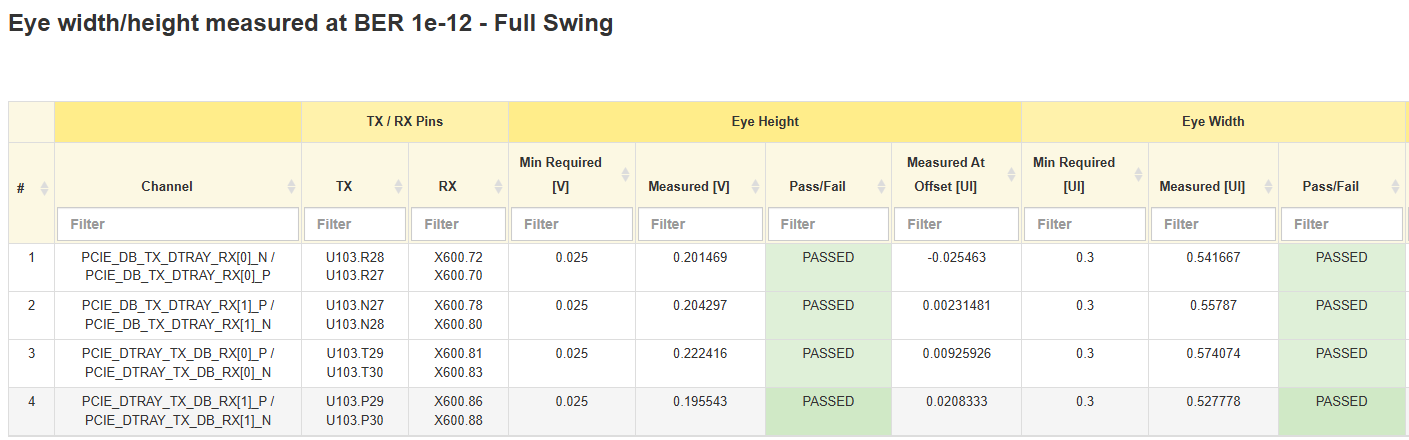
- SerDes Compliance Wizard: Verifying high-speed channels often requires numerous setup steps, protocol definitions, model assignments and simulation configurations. The wizard automates much of this process through a guided workflow, helping engineers perform compliance analysis faster while following industry best practices. Results are exported in HTML format with metrics such as eye height and eye width.
- Python automation: Engineers can build repeatable workflows to run simulations, perform parameter studies, collect results and generate reports automatically.
Automation does more than save time. It also improves consistency across projects, reduces the risk of human error and ensures that established methodologies are applied uniformly.
AI: Turning data into insight
Modern simulation workflows generate enormous amounts of data, including eye diagrams, insertion loss plots, return loss measurements and compliance metrics. Extracting insight requires deep expertise and careful analysis. New AI capabilities in HyperLynx are helping simplify this process.
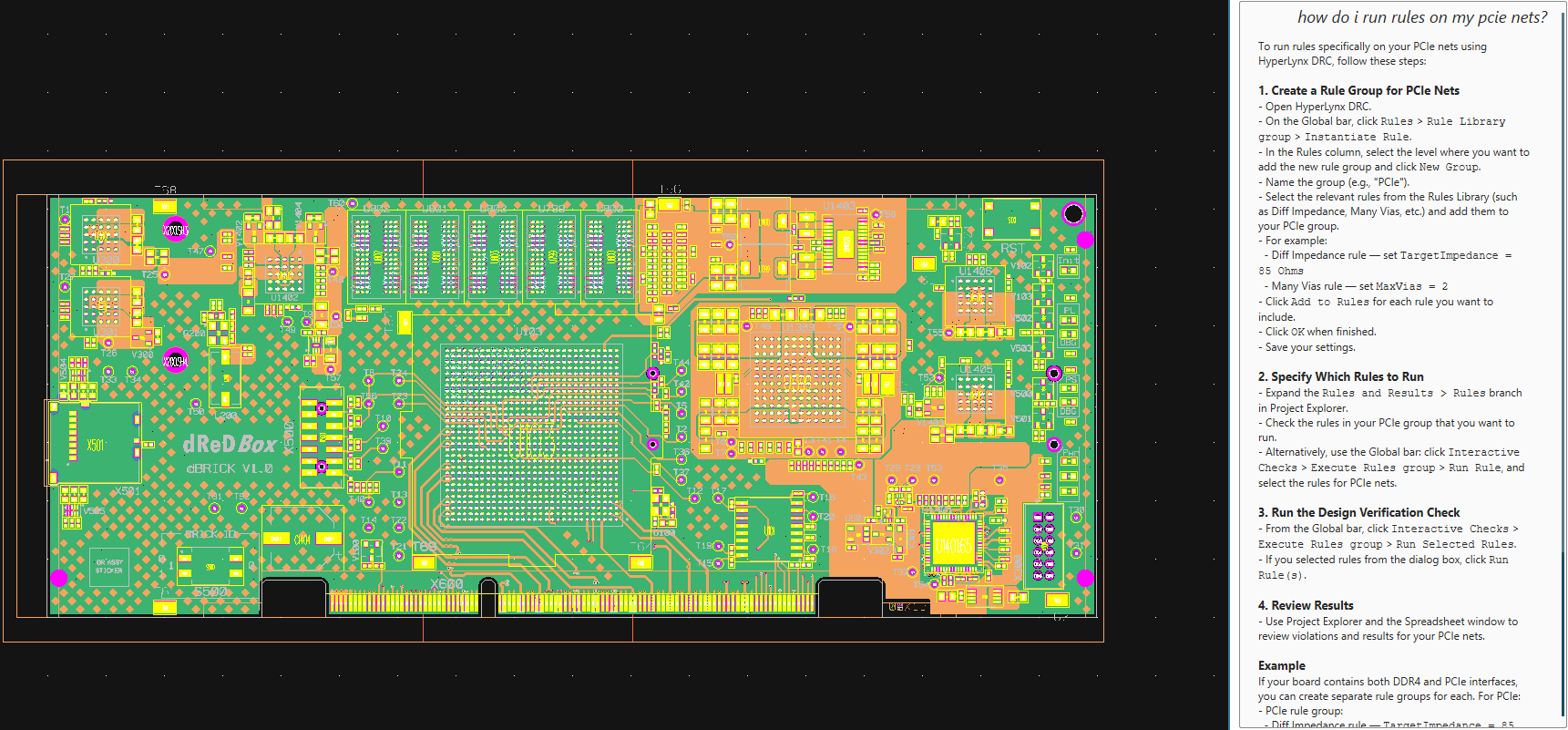
- Copilot: Engineers can interact with the tool in natural language to quickly access product knowledge, workflow guidance and setup assistance. Instead of searching through documentation or navigating complex menus, users can ask questions directly within the design environment, for example about running rule checks in HyperLynx DRC.
- Results interpretation assistance: By analyzing simulation outputs, AI helps identify problem areas, highlight performance risks and suggest potential root causes for further investigation. Engineers can spend less time working through reports and more time evaluating solutions.
The goal is to make advanced PCB analysis more accessible and effective while keeping engineering judgment at the center of the process.
Smarter engineering starts today
Optimization, automation and AI form a natural progression that helps engineers manage increasing design complexity and accelerate product development.
Discussions about AI often focus on what might happen in the future. In practice, intelligent engineering workflows are already delivering value through optimization and automation, helping designers make better decisions, execute analyses more efficiently and gain a deeper understanding of system performance. As AI matures and becomes integrated into existing workflows, engineering teams will gain more powerful tools for managing complexity and driving innovation.
The question is no longer whether intelligent systems will become part of PCB design, but how quickly organizations can put them to work to gain a competitive advantage.
Explore the latest HyperLynx capabilities to transform your SI/PI workflow through optimization, automation and AI-driven PCB analysis. Siemens also offers an in-depth whitepaper covering this topic, titled “The evolution of intelligent systems: From optimization to automation to AI”, on the Siemens Digital Industries Software resource site.
Source: Siemens.
Learn more
- HyperLynx: A parallel reality
- Powering innovation: How Xpedition add-ons transform PCB design with HyperLynx signal integrity analysis
- Explore Siemens Xpedition: Features, Benefits, and Editions
Contact us for free and detailed advice: