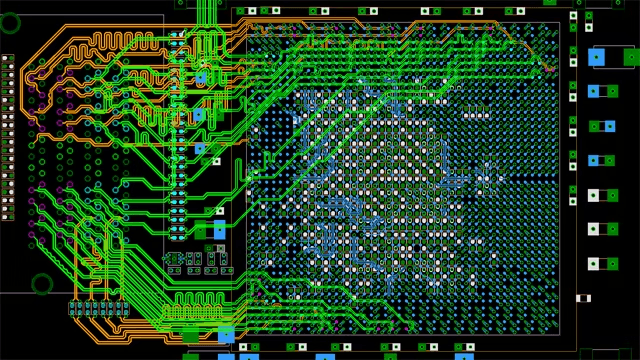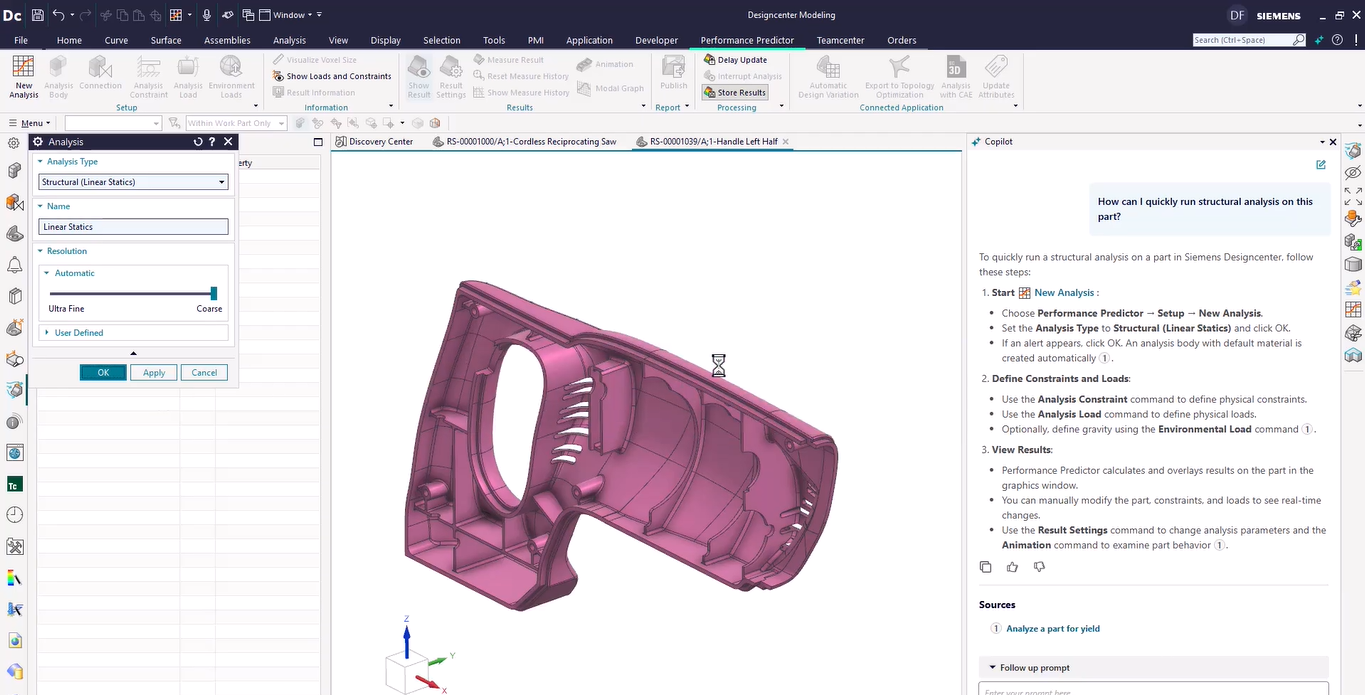


Artificial intelligence is bringing significant changes to electronic design. As ICs and PCBs become more complex, engineers must handle larger datasets, more simulation iterations, and increasingly demanding verification processes. In this context, AI is becoming an important tool for automating tasks, accelerating analysis, and helping engineers make more effective decisions.
Siemens EDA AI combines traditional EDA algorithms with Machine Learning (ML), Reinforcement Learning (RL), Generative AI, and Agentic AI to support multiple stages of semiconductor and PCB design – from implementation, simulation, and DFT to physical verification and workflow orchestration.
A key aspect of Siemens’ approach is that AI does not replace EDA tools or the role of engineers. Instead, it accelerates suitable tasks, processes engineering data, and provides recommendations. Verification and sign-off continue to rely on proven EDA methods.
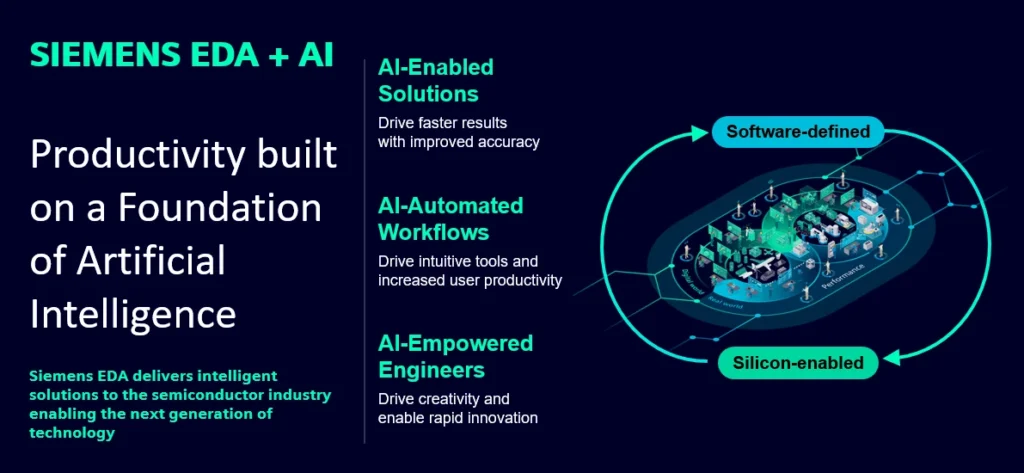
The Three Pillars of Siemens EDA AI
Siemens EDA’s AI strategy is built on three key pillars:
Faster Engines – Accelerating Engineering Tasks
AI and advanced computing capabilities accelerate design, simulation, verification, and optimization tasks.
Smarter Execution – More Intelligent Workflows
Generative AI and specialized AI agents help automate repetitive tasks, enable natural-language interaction, and coordinate engineering workflows.
Trusted Outcomes – Verified Results
AI recommendations and actions are checked through EDA tools and traditional verification processes, ensuring that engineers retain control over the final results.
Building on these pillars, Siemens applies AI across multiple EDA solutions, including Aprisa AI, Solido Generative & Agentic AI, Tessent Embedded AI, Calibre Vision AI, and Fuse EDA AI System.
Aprisa AI – Optimizing Digital ICs from RTL to GDS
In digital IC design, meeting Power, Performance, and Area (PPA) targets often requires multiple iterations and adjustments to the design flow.
Aprisa AI uses ML, Reinforcement Learning, Generative AI, and AI agents to support implementation from RTL to GDS. Its AI Design Explorer technology can automatically explore implementation strategies aligned with engineers’ PPA targets, reducing manual tuning and accelerating design closure.
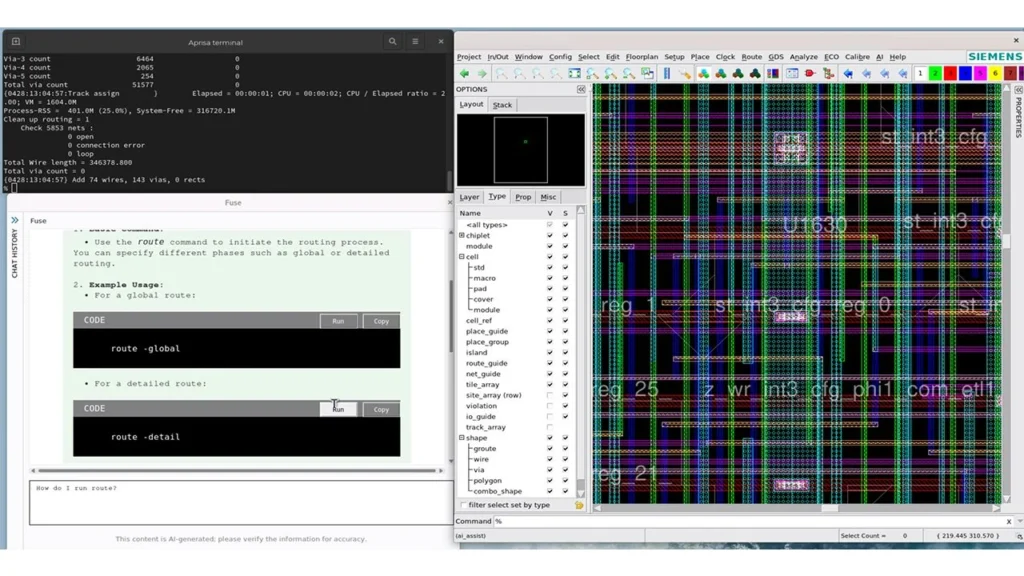
Aprisa also provides natural-language assistance, command suggestions, and automation for selected design tasks, while engineers remain in control of execution.
Solido AI – AI for Custom IC and Analog/Mixed-Signal Design
In custom IC, analog, and mixed-signal design, engineers must process large amounts of simulation data, waveforms, testbenches, and variation analysis results.
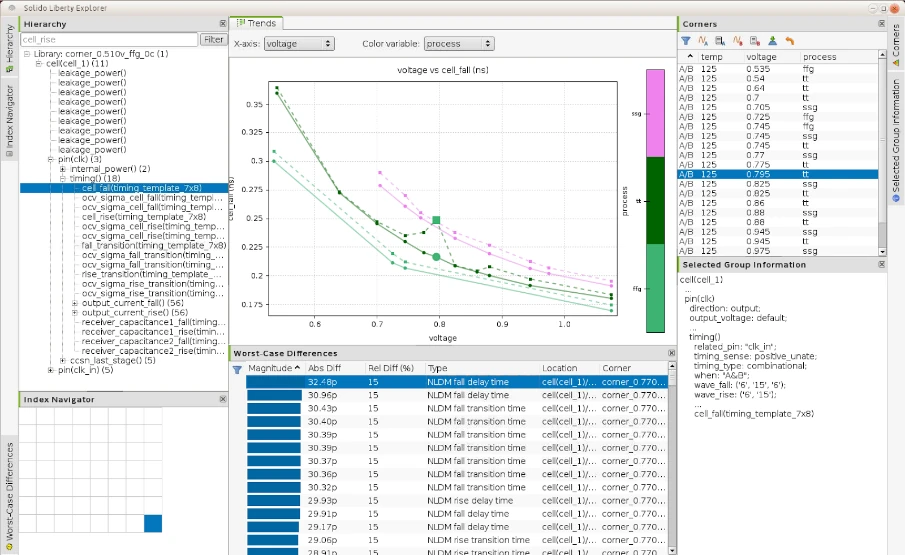
Solido Generative & Agentic AI supports workflows ranging from simulation and variation-aware verification to library characterization and IP validation.
AI can help predict computing resource requirements, optimize testbenches, summarize key metrics, and analyze logs or waveforms. This helps engineers quickly identify issues that require attention.
Rather than replacing the simulation engine, AI helps engineers extract and interpret engineering results more quickly.
Tessent Embedded AI – From DFT to Yield Learning
AI is also deeply integrated into the Tessent ecosystem for Design-for-Test and semiconductor manufacturing test.
Analytical and predictive AI technologies can support ATPG optimization, fault coverage analysis, diagnosis, and yield learning. For example, ATPG Expert can automatically adjust test parameters to balance fault coverage and pattern count.
After manufacturing, Machine Learning and probabilistic methods can also help identify suspected defects and analyze failure data across large numbers of chips to uncover systematic causes affecting yield.
Calibre Vision AI – Accelerating DRC Analysis
As IC designs grow larger, a single Design Rule Check (DRC) run can identify a substantial number of design rule violations.
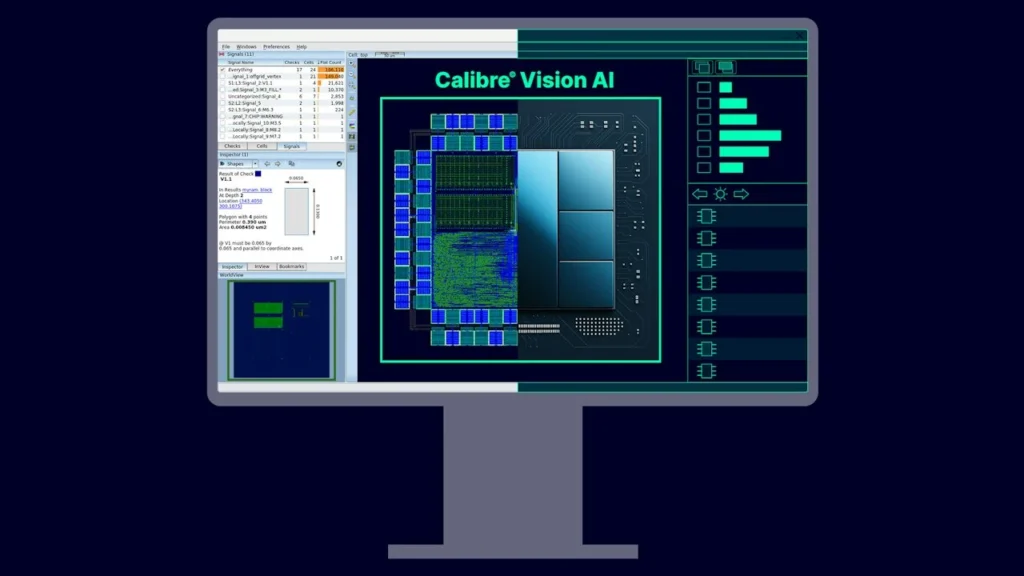
Calibre Vision AI helps engineers organize and analyze these results by visualizing violation density across the chip, grouping violations with similar characteristics, and supporting analysis at the chip, block, or hierarchy level.
This allows verification teams to quickly identify hotspots and focus on groups of violations that may share a common root cause.
However, the Calibre rule deck and physical verification engine remain the final basis for determining whether a design meets the design rules. Vision AI focuses on making debugging more efficient.
Fuse EDA AI System – Connecting AI Across the EDA Ecosystem
While Aprisa, Solido, Tessent, and Calibre apply AI to specific engineering challenges, Fuse EDA AI System serves as a broader AI layer.
Fuse connects EDA knowledge, authorized engineering data, natural-language interfaces, and AI agents to support workflows across multiple tools.
The system uses EDA-specific Retrieval-Augmented Generation (RAG) to retrieve product knowledge, commands, and workflow guidance relevant to the engineering context.
The Role of Each Solution in EDA Workflows
- Aprisa AI: Digital implementation and PPA optimization.
- Solido AI: Simulation, variation analysis, and custom IC design.
- Tessent AI: DFT, ATPG, diagnosis, and yield.
- Calibre Vision AI: Physical verification and DRC debugging.
- Fuse EDA AI: Connecting knowledge, data, natural-language interaction, and AI agents across multiple workflows.
From Automation to Engineering Intelligence
The value of Siemens EDA AI goes beyond adding a chatbot to design software. AI is being integrated directly into specific engineering tasks – from RTL-to-GDS optimization, simulation, and DFT to physical verification and design data analysis.
This helps engineers spend less time on repetitive tasks, information searches, and large-scale data processing, allowing them to focus more on important engineering decisions.
During deployment, businesses still need to select the appropriate AI capabilities for each bottleneck and assess tool compatibility, deployment models, security, and licensing.
AI-generated results should be treated as engineering inputs, while verification and sign-off continue to follow standard EDA workflows.
Further Reading
- Closing Ceremony Of The First Training Courses Of IC Design And Electronic Systems Design In Vietnam Supported By Siemens
- VBTECH Attends the SemiExpo Vietnam 2026 Launch Event
About Us
VBTECH provides software solutions and digital engineering services in Vietnam, including consulting, implementation, and after-sales technical support for Siemens EDA solutions.
Businesses interested in Siemens EDA AI solutions, product configurations, or solution demonstrations can contact VBTECH for detailed consultation.