

When a Design Decision Can Determine the Cost of an Entire Mold
In product and mold development, the later a problem is discovered, the more expensive it becomes to fix. During the concept stage, modifying a geometric feature may take only a few minutes.
However, if the issue is identified only after the design has been finalized, the mold has been manufactured, or the product has entered testing, companies may face multiple cycles of design revisions, mold modifications, mold trials, evaluations, and rework.
This is why simulation should not be reserved for the final stage of the process.
Simulation should be incorporated from the very beginning of design development.
With the Simulation-Driven Design approach, Simcenter Inspire brings simulation, optimization, and manufacturability assessment closer to designers within a CAD-like environment. Siemens positions Inspire as a platform that enables concept exploration, performance validation, and early manufacturability evaluation throughout the design process.
For mold-making and manufacturing companies, the Inspire ecosystem extends to numerous applications, including Die Casting, Plastic Injection Molding, Sheet Metal Forming, Extrusion, PolyFoam, and 3D Printing.
What Is Inspire Manufacturing?
Inspire Manufacturing can be understood as an approach that uses the Inspire ecosystem to integrate manufacturing simulation directly into the design development process.
Instead of the traditional workflow:
Design → Complete CAD → Transfer to CAE → Simulation → Error Detection → Return to Design
Companies can move toward:
Concept → Design → Simulation → Manufacturability Assessment → Optimization → Finalization
The key difference lies in when simulation is used.
The goal is not simply to run more simulations, but rather to bring manufacturing intelligence into design decisions as early as possible.
Designing with Manufacturing in Mind from the Start
A product may meet its functional requirements but still not be optimized for manufacturing.
For mold design, engineers must simultaneously consider factors such as:
- Product geometry
- Formability
- Material flow
- Fill capability
- Shrinkage and warpage
- Springback
- Part release and demolding
- Mold system location and design
- Process parameters
- Material reduction opportunities
- Production cost and lead time
If these factors are evaluated only after the design has been completed, the development process is likely to become trapped in a cycle of trial and correction.
Inspire moves these considerations earlier in the product development process.
This aligns with Siemens’ simulation-driven design philosophy, combining geometry modeling, generative design, and manufacturing simulation to support design decisions before production begins.
One Ecosystem for Multiple Mold Manufacturing Challenges
What makes Inspire noteworthy is not a single module but its ability to support a wide range of manufacturing processes.
- Inspire Cast: Die Casting Simulation
For foundries and manufacturers producing cast components, discovering defects after mold production can be extremely costly.
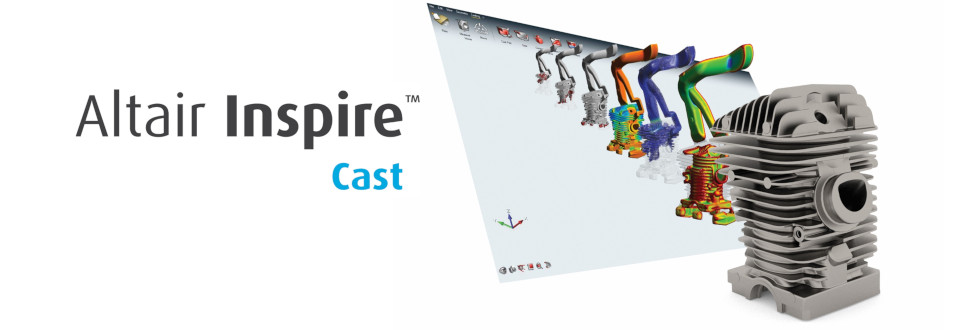
Inspire Cast supports virtual testing, validation, correction, and optimization of casting designs. The software includes guided workflows for a variety of casting methods, including:
- Gravity Die Casting
- Gravity Sand Casting
- Investment Casting
- High Pressure Die Casting (HPDC)
- Low Pressure Die Casting (LPDC)
- Tilt Pouring
A key advantage of Inspire Cast is its focus on early-stage design validation, helping reduce iterations between design and production. Siemens also highlights its geometry-centric workflow and the integration of physical simulation with machine learning.
Value for Manufacturers
Instead of asking:
“Will this casting mold work?”
Designers can ask a more valuable question much earlier:
“How should this part design be modified to improve the likelihood of successful casting?”
This is the fundamental difference between:
Simulation for verification and simulation for design guidance.
- Inspire Mold: Plastic Injection Molding Simulation
For plastic products, product design and mold design are tightly interconnected.
A geometry optimized for functionality may not necessarily be optimized for injection molding.
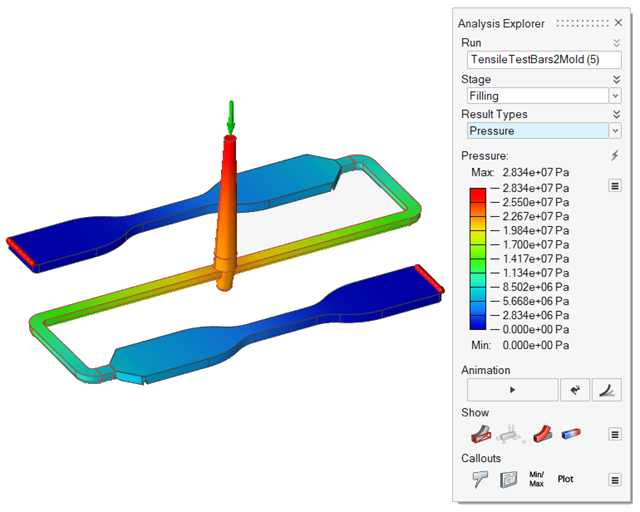
Inspire Mold provides a simulation-driven design environment for evaluating, validating, correcting, and optimizing part or mold designs at the earliest stages of development.
Key benefits include:
- Fill analysis
- Potential defect prediction
- Manufacturability validation
- Design optimization before tooling investment
- Inspire Form: Sheet Metal Forming Simulation
For stamped and sheet metal formed products, success is about more than achieving the final geometry.
Manufacturers also need answers to questions such as:
- Is the part formable?
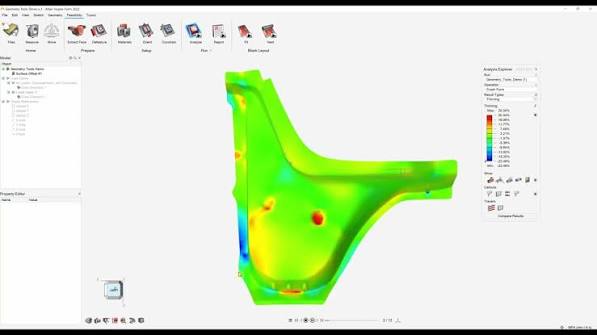
- Will thinning or wrinkling occur?
- Is there a risk of splitting?
- Will springback affect dimensional accuracy?
- What should the optimal blank shape be?
Inspire Form supports:
- Formability analysis
- Material utilization optimization
- Die face design
- Process simulation
- Virtual tryout
Most importantly, early formability assessment reduces dependence on costly physical die testing to uncover potential issues.
- Beyond Die Casting, Molding, and Forming
The Inspire ecosystem includes additional manufacturing solutions such as:
- Inspire Extrude Metal for metal extrusion simulation
- Inspire Extrude Polymer for polymer extrusion simulation
- Inspire PolyFoam for polyurethane foam simulation
- Inspire 3D Print for additive manufacturing assessment and optimization
- Additional design, rendering, and simulation tools within the Inspire portfolio
This creates a significant advantage for companies that manufacture diverse product types using multiple production processes:
There is no need to build a completely different workflow for every manufacturing challenge.
Simulation for Designers, Not Just CAE Experts
One of the main barriers to CAE adoption is the gap between Designers and Simulation Engineers.
Traditional simulation often requires specialized tasks such as:
- Geometry preparation
- Model setup
- Meshing
- Solver configuration
- Result interpretation
Inspire is designed specifically with designers in mind, bringing simulation and computational physics into an intuitive CAD-like environment. Embedded solvers automate or simplify many meshing-related tasks.
This is particularly valuable during the concept phase.
Designers do not need to become full CAE experts. Instead, they can use simulation as a decision-support tool.
Optimizing Designs Before They Fully Take Shape
This is one of the most important benefits of Simulation-Driven Design.
When Simulation Happens Too Late
- High design change costs
- Multiple development iterations
- Limited flexibility to modify geometry
- Increased risk during mold trials
When Simulation Happens Early
- Multiple concepts can be explored
- Geometry changes are easier
- Manufacturing issues are identified sooner
- Better designs emerge before production investment
Inspire combines modeling, optimization, and simulation within a single environment to support both concept exploration and manufacturability evaluation.
The shift is from: “Design first, simulate later” to “Design with simulation.”
Altair Units: Flexible Access to Multiple Modules Through a Single Licensing Model
Another challenge in engineering software investment is that requirements vary from project to project.
One project may require Die Casting simulation.
Another may require Plastic Injection Molding.
A third team may need Forming analysis.
Purchasing separate licenses for each application can lead to underutilized software investments.
The Altair Units model addresses this challenge by allowing companies to use a shared pool of Units across multiple Altair applications.
Applications such as:
- Inspire Cast
- Inspire Mold
- Inspire Form
- Other Altair solutions
consume Units according to their features and usage requirements.
Some functions can check out Units when needed and return them when no longer in use.
What Does This Mean for Companies?
Instead of thinking:
“Purchase one license for one application.”
Organizations can adopt the mindset:
“Build a pool of Units and allocate them according to actual needs.”
This provides greater flexibility and enables businesses to maximize software utilization across changing project demands.
The focus shifts from:
Investing in isolated software tools
to
Investing in simulation capability.
Maximizing Engineering Software ROI
A software solution does not create value solely because of its computational power.
Its real value comes from how effectively the organization leverages the investment.
By combining Inspire with Altair Units, companies can:
- Increase Access to Simulation
Designers can participate earlier in simulation activities.
- Expand Engineering Capabilities
Casting, molding, forming, extrusion, and other manufacturing processes can be addressed within a single ecosystem.
- Reduce Design Iterations
Issues are discovered while designs are still easy to modify.
- Reduce Dependence on Physical Testing
Simulation helps evaluate and eliminate poor alternatives before costly real-world trials.
- Improve License Utilization
Units can be allocated dynamically across teams and projects based on actual demand.
Which Companies Can Benefit from Inspire Manufacturing?
The solution is particularly suitable for organizations involved in:
- Die casting molds
- Plastic injection molds
- Stamping and sheet metal forming dies
- Metal cast products
- Plastic products
- Stamped components
- Extrusion products
- Manufacturability-driven design optimization
- Bringing simulation closer to design teams
It is especially valuable for companies experiencing challenges such as:
- Excessive design iterations before approval
- Multiple mold tryout cycles
- Simulation performed only near design completion
- Heavy dependence of designers on CAE specialists
- Diverse mold and tooling portfolios
For these organizations, Simulation-Driven Design and flexible licensing models offer a compelling path forward.
The Future of Mold Design: Simulation in the Hands of Designers
Advances in AI and modern simulation technologies continue to transform how engineers use CAE tools.
In Simcenter Inspire 2026.1, Siemens introduced AI-enabled workflows where PhysicsAI models can be trained using existing simulation data and then used to predict results for new geometries.
These capabilities have been expanded across:
- Cast
- Mold
- Form
- Extrude
applications within Inspire.
This highlights a clear industry trend:
Simulation is moving from the CAE department closer to the design process itself.
In the future, the question will no longer be:
“Do designers use simulation?”
Instead, it will be:
“How early can designers use simulation to create better designs?”
Conclusion: Don’t Optimize the Mold After the Design Is Finished
In mold manufacturing, timing is just as important as the optimization method itself.
If simulation is performed only after design completion, many opportunities for improvement have already been lost.
Inspire Manufacturing brings simulation earlier into the development process.
Concept → Design → Simulation → Optimization → Manufacturability Assessment → Production
With solutions for Die Casting, Plastic Injection Molding, Forming, Extrusion, and many other manufacturing processes, Inspire enables a new approach:
Design for Manufacturing from Day One.
Combined with the Altair Units licensing model, organizations gain the flexibility to allocate software capabilities according to project needs and maximize the return on their CAE investments.
Contact us for free and detailed advice