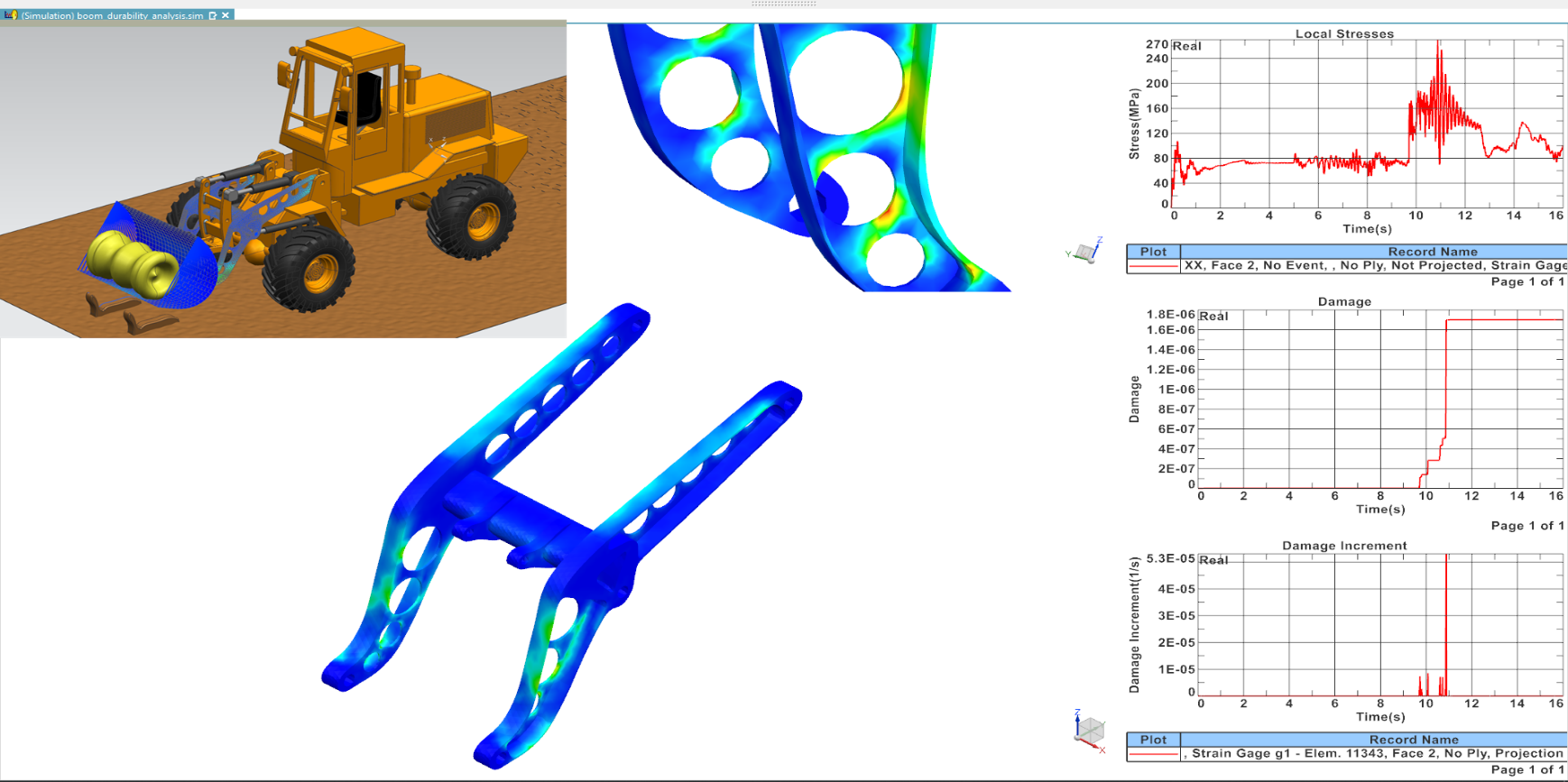


For many manufacturing companies, particularly small and medium-sized enterprises (SMEs), investment in machinery, equipment, and production lines accounts for the largest share of their technology budget. In contrast, spending on licensed software and software solutions for design, production operations, manufacturing management, and enterprise management is often overlooked. This represents a common paradox in technology investment.
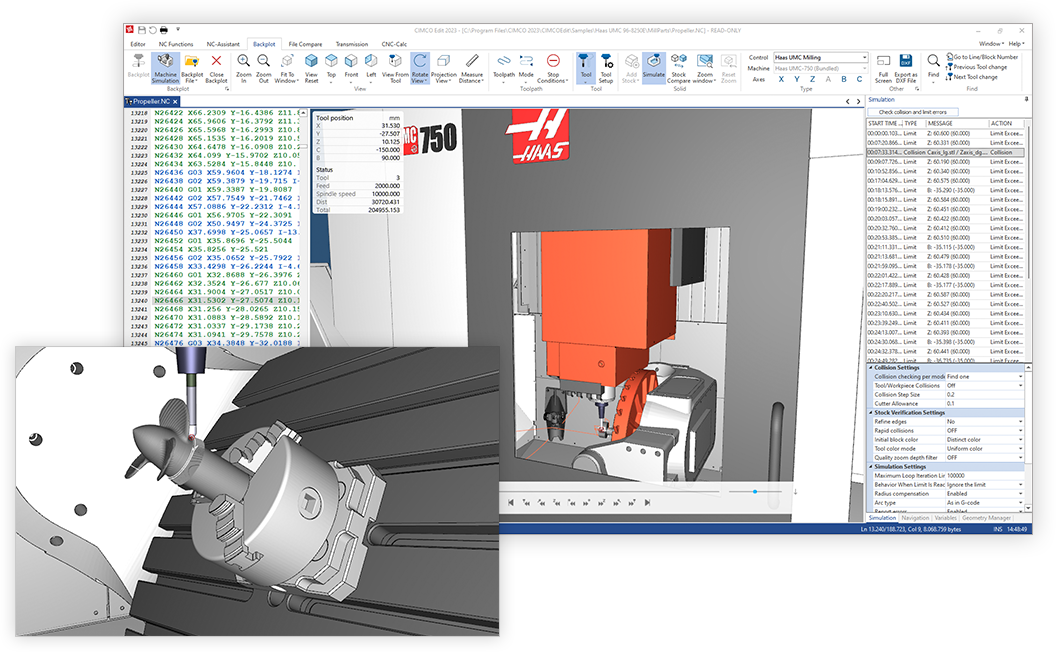
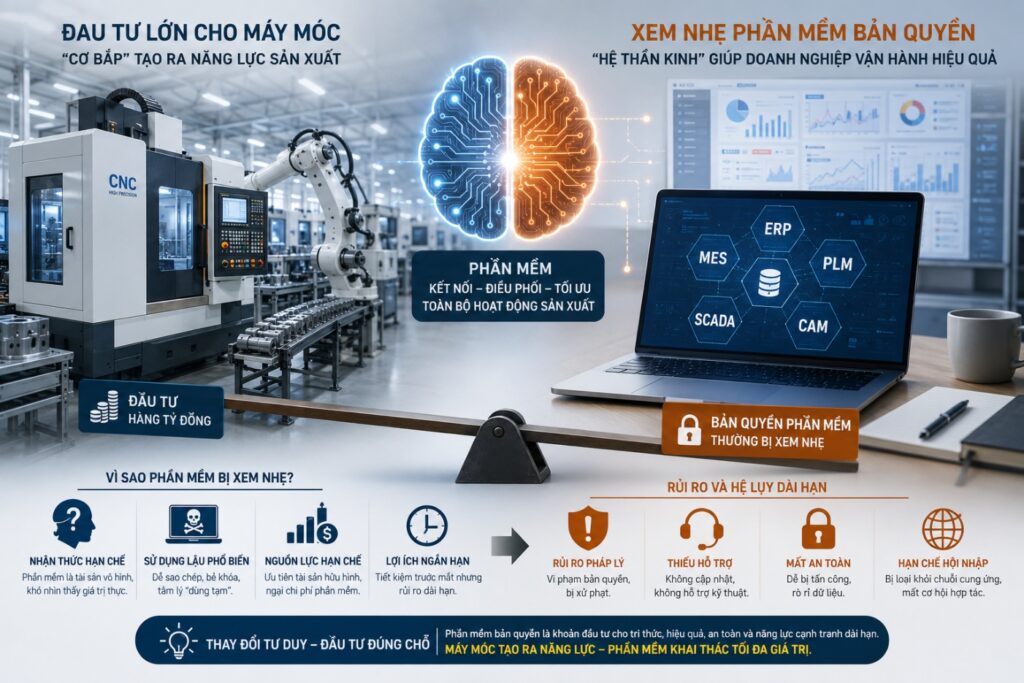
In reality, many modern machines cannot deliver their full value without the software that enables them. For example, a CNC machine may cost hundreds of thousands of dollars, but without CAM software to generate and optimize toolpaths, its capabilities remain significantly underutilized. Likewise, in the journey toward digital transformation and smart manufacturing, systems such as ERP, MES, SCADA, PLM, and data analytics platforms serve as the “brain” of the enterprise. They coordinate production activities, integrate data across departments, and provide managers with the insights needed for informed decision-making. If machinery represents the “muscles” that create production capacity, software is the “nervous system” that enables the entire operation to function efficiently.
So why is software still frequently undervalued?
One reason lies in perception. Because software is an intangible asset, many people see a software license as nothing more than a product key or a certificate. In reality, its value extends far beyond activation. Licensed software represents intellectual property, advanced technologies, algorithms, continuous updates, technical support, cybersecurity improvements, and the legal right to use the software. Since these benefits are invisible compared with a physical machine or production line, software is often perceived as less valuable than it actually is.
Another reason is the widespread use of unlicensed software. Unlike machinery or other physical assets—which are virtually impossible to use illegally—software can be copied, cracked, or installed without authorization at very little cost. This creates a mindset of “we’ll use it for now,” “we don’t need to buy it yet,” or “we’ll deal with it if we’re ever audited.” As a result, investment in licensed software is often postponed in favor of tangible assets, despite software’s critical role in modern manufacturing.
A further argument frequently raised is that small businesses have limited financial resources and cannot afford licensed software because it increases operating costs and reduces competitiveness. However, this argument only holds true in the short term.
If a company can afford to invest in advanced machinery, it should recognize that software is an integral component of that investment. Purchasing software is not an additional expense; it is part of the cost of maximizing the value of the equipment already acquired. A modern production line operated with inappropriate or unlicensed software is unlikely to achieve optimal performance and may even reduce the overall return on investment.
Any financial advantage gained from using unlicensed software is, at best, temporary. While companies may save money upfront, they expose themselves to significant long-term risks, including the inability to receive software updates, lack of technical support, increased cybersecurity vulnerabilities, potential production disruptions, and, most importantly, violations of intellectual property rights.
More importantly, these risks may not appear significant when a business operates on a small scale or serves only the domestic market. However, they become a major obstacle once the company seeks to expand internationally, participate in global supply chains, or become a supplier to multinational corporations.
Global manufacturers typically conduct comprehensive supplier audits, in which legal compliance—including the use of properly licensed software—is an important evaluation criterion. A company found to be using pirated software may be disqualified during the initial supplier qualification process, regardless of its manufacturing capabilities.
Therefore, investing in licensed software is not merely a matter of legal compliance. It is also an indicator of corporate governance, professionalism, operational maturity, and readiness for global integration. In an era of digital transformation and increasing international competition, licensed software should be recognized as a strategic technology asset, just as valuable as machinery, equipment, and factory facilities.
The technology investment paradox will only be resolved when businesses change their perspective. Licensed software is not simply the cost of purchasing a product key; it is an investment in knowledge, operational excellence, security, and long-term competitiveness. Machinery creates production capacity, but software ultimately determines how much of that capacity can be transformed into real business value.
Contact us for free and detailed advice